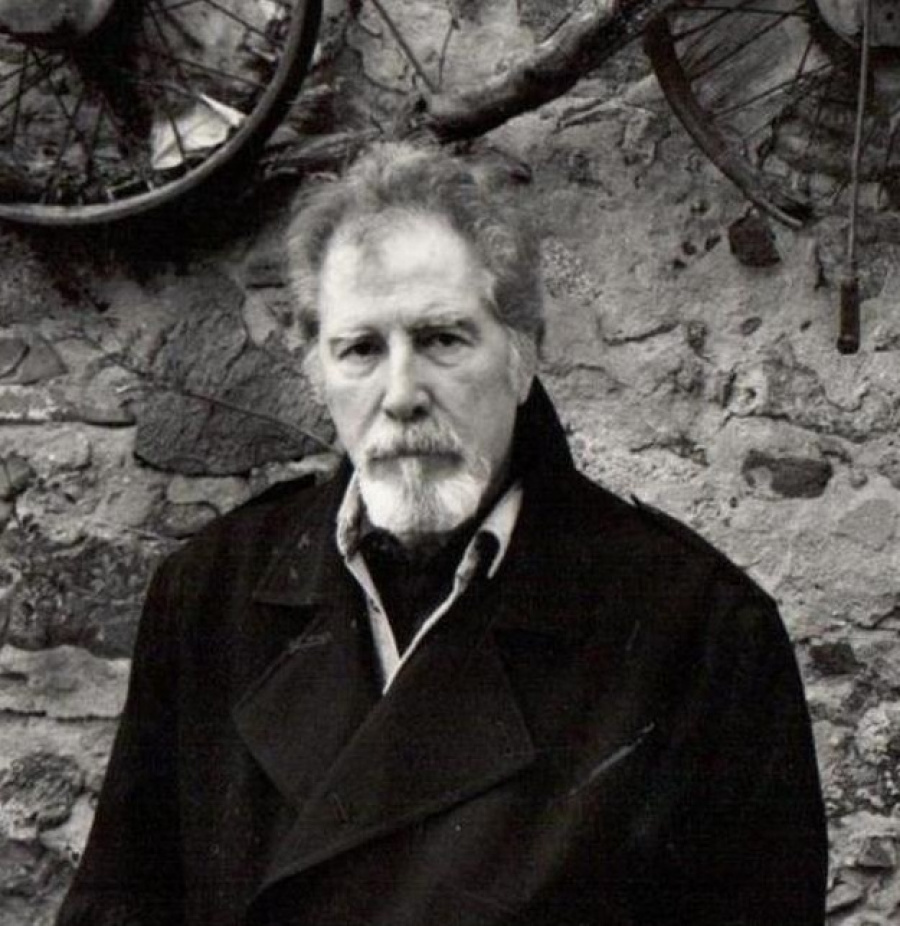
Modest Cuixart i Tàpies (Barcelona, 1925 – Palamós, 2007) remains one of the most singular, complex, and influential figures in Spanish contemporary art of the second half of the 20th century. His legacy is an essential cornerstone for understanding the evolution of Informalism and post-war avant-gardes in Europe.
In 1948, Cuixart co-founded the legendary Dau al Set group alongside Joan Brossa, Antoni Tàpies, Joan Ponç, Arnau Puig, and Joan-Josep Tharrats.
During the 1950s, his time living in Lyon and Paris marked his definitive shift toward Matter Informalism. This culminated in historic international acclaim: winning the First International Painting Prize at the 5th São Paulo Art Biennial (1959), establishing his place alongside figures such as Jean Dubuffet and Lucio Fontana on the global stage.
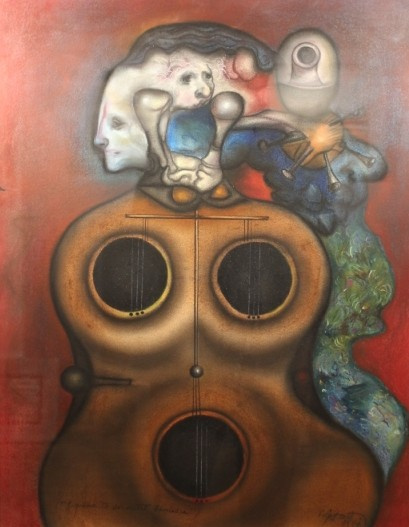
Throughout the 1960s and 1970s, his work evolved toward a unique erotic, refined figuration with calligraphic touches, populated by enigmatic faces, nymphs, and silhouettes that blended graphic precision with a distinctly lyrical and haunting tone.
Over more than six decades of creation, Cuixart exhibited his work in the world's major art capitals — from New York to Tokyo.
His work is part of the permanent collections of world-renowned museums, such as the Museo Nacional Centro de Arte Reina Sofía (Madrid), MACBA (Barcelona), and Tate Modern (London), reflecting the universal impact of a creator who made art an uninterrupted exercise in freedom.